Showing posts with label empowerment. Show all posts

30 January 2014

Best protection is education

This is my article for the CoLRiC Newsletter, issue 59 (December 2013)
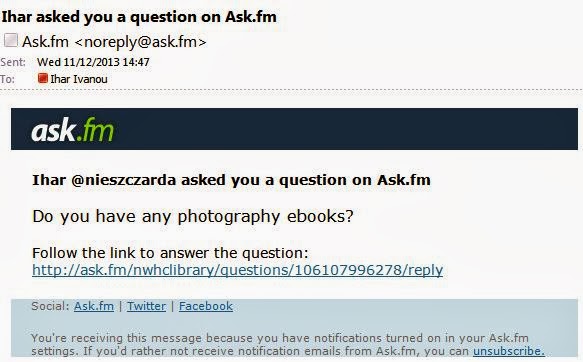
Last summer, a suicide of a 14-year old girl took place in Leicestershire; apparently, it was provoked by cyberbullying. Following the tragic event, tabloids demanded from the government to censor Ask.fm, a Latvia-based website extremely popular among teenagers. ‘Our children must be protected from irresponsible adults’, the message was. Among that storm, very few sober and reasonable voices were heard: the best protection is education.

By no means, this a controversial thought – to educate, not to ban. In 2010, Ofsted published a report, The Safe Use of New Technologies (Ofsted, 2010), based on research about schools’ engagement with the internet, emerging technologies and safeguarding. One of the key findings of that report sounds very much up to date now: Pupils in the schools that had ‘managed’ systems had better knowledge and understanding of how to stay safe than those in schools with ‘locked down’ systems. Pupils were more vulnerable overall when schools used locked down systems because they were not given enough opportunities to learn how to assess and manage risk for themselves.


09 August 2013

Ask.fm for enquiry service and classroom interaction

While I was reading the tragic news on bullying on ask.fm, it occurred to me that the site might be used as a virtual enquiry desk - for healthy communication with library users. It certainly has all the necessary basic functionality:
  • optional registration (questions can be posted very quickly, without a prolonged registration and login)
  • immediate notification of the posted question by email (currently the notification emails from ask.fm don't reach my college email boxes; I have raised the question with my IT colleagues)
  • RSS output (a widget can be created to display the questions and answers on the library webpage)
  • a widget - a bit too inflexible to my mind, but very easy to use - for embedding the query box anywhere on the internet.

I imagine, this may be handy for teaching too: learners can post their questions and comments; the tutor then will respond to them or ignore as appropriate.

28 April 2010

Library as a means of social change

Access to learning resources will be an important issue in education in the context of addressing the socio-economic inequality that a recently passed Equality Act is talking about. I hope libraries in FE colleges will have a chance to contribute hugely to giving free and equal access to learning resources, information and IT facilities to learners from all the backgrounds.

25 March 2010

Quick Reads return to library


Sometimes the simplest ideas make a big difference.

A few years ago a section with books for emerging readers (those who would prefer shorter and simpler texts) was dispersed. The reason for this was a comment from a member of the college staff that it might embarrass less literacy-able students if others saw them going to the shelf with those books. The result was unfortunate: several hundreds of good books were buried among others and hardly ever used.

Librarians have tried teaching emerging readers and pathfinders catalogue searching skills. It was not successful, as searching requires a certain level of literacy which was not present yet in some of our users. It was sad to see that we had under-used resources and, at the same time, there were learners whose needs we could not satisfy. There was something wrong with our practice.

Eventually, we decided to remove Quick Reads publications and similar books from the main classification sequence. Instead of a shelf case at the back, as years ago, the most prominent spot in the library in Nuneaton has been allocated for that collection. Since then, hardly a day passes without Quick Reads being borrowed. Tutors come with learners to guide their emerging interests in reading, while learners come on their own to browse through a few shelves. Library staff now have opportunities for assisting our emerging readers in discovering ever greater possibilities. A simple idea has turned to be a real success.

11 December 2009

Participatory media


Yesterday I went to Blogs, Wikis and Social Networking session organised by a local JISC (the governmental agency promoting use of technologies in education).

Already the first conversation brought a surprise - one of the participants was a HR person from one of FE colleges (I did not expect to meet there anyone but librarians and a handful of teachers). She was after ideas for developing internal communication in the College as the traditional ways like newsletters and emails are not sufficient enough any more. It was refreshing to see that not only librarians are taking the reality of fragmented information landscapes seriously.

There was a lot of discussion around threats (to safety, traditional literacy), barriers (to information as experienced by less digitally savvy people), difficulties (bandwidth, waste of time) etc.

I was left with the question whether damage to an institution from not having a blog (or not being present on, let us say, Facebook; or discouraging employees from creative use of "participatory media") is greater than from having it and dealing with a number of serious chllenges and/or unwanted consequences. It's not even the matter of allowing or blocking access. It's rather a question of institutional culture: are creativity and responsibility encouraged or anything that is "un-official" is discouraged? are staff provided with help and advice on positive engagement with the web? is learners' voice - freely expressed, not pre-selected and beautifully pre-packaged - is present in the whole picture of what the institution (College) is like?

If such participation, responsibility and trust are encouraged, the whole discourse about the institution will be quite different - not as polished as we are used to see it in glossy prospectuses, but much livelier, first-hand accounts of people's experiences. It sounds challenging and even scary, but isn't it what we actually enjoy reading and trust the most? That's why the old school editorial control on the web seems to be of limited value.

Perth College's blogging experience is very interesting from a librarians' point of view. They have two blogs, for users and for their own staff. The first one is used for sharing news. I like the idea of emphasising the new resources purchased. Pity, Heritage does not allow current awareness output in RSS feeds at the moment, otherwise it'd be easy to embed such updates into Moodle pages and Facebook. Another blog is for staff development within the team. The weak point for developing a SD blog is Outlook which - in its current incarnation - does not allow RSS feeds import along with emails. It's not clear to me how to create just one space where all the content and messages intended for the library staff could come and sit together. Will we remember to visit a blog regularly if it's been created?!

An interesting discussion took place during the lunch break. What happens to all the profiles and pages if their owner dies, especially if dies unexpectedly? There was a lot of fun discussing wills which should now include something about Facebook profile management.

One memorable quote from the day? - It's from the Tame The Web blog: "
a core value of librarianship - community building". People want to communicate, create and share, learn from each other... where other ways fail - teachers do not have time, insufficient funding, digital divide - librarians (in FE) create physical and virtual spaces for self-guided study and connecting.

One blog post that I made a note of to look at later on more carefully was
Should You Friend Your Students? The Short Answer Is No by Josie Fraser from JISC in Leicester. I am pleased that some comments were critical - I do not believe in complete separation of personal and professional life. I mean, it's possible, but rather unhelpful, in my opinion.

Wikis... we used them with Early Years learners last year and it was not as successful as I hoped. Potentially, it can be a great way for keeping library procedures up-to-date and easily editable.

A fantastic characteristic of wikis which I will constantly use when talking to students about Wikipedia: it has a fluid content. It's its strength and weakness at the same time.

Another example of people's desire and need to speak, contribute, being heard -
Write To Reply. We do need editors who would inspire learners and staff to write to bulletins, websites, Facebook pages...

A similar session will take place in Nottingham in February.

Image: http://www.sxc.hu/photo/1108254

08 December 2009

Blogging boosts literacy


At last we have a strong evidence of the usefulness of blogging. The National Literacy Trust has published a research, "Young people's writing: Attitudes, behavior and the role of technology" which had involved over 3,000 young people. Those who had blogs and were engaged in social networks had more positive view of their own writing abilities and were more likely to enjoy writing. To learn more about the research, follow the links below (the shortest reports are in the beginning, but if you have time, read the third one):
  1. http://www.tes.co.uk/article.aspx?storycode=6029101
  2. http://www.thebookseller.com/news/105621-blogs-can-boost-literacy-says-nlt-research.html
  3. http://www.independent.co.uk/news/education/schools/dont-knock-blogging-ndash-its-the-answer-to-our-literacy-problems-1832593.html
  4. http://www.literacytrust.org.uk/research/Writing_survey_2009.pdf (PDF, report itself)

The most insightful educators and librarians have been saying for some time that information empowerment is the way ahead. This means to move away from the old style of controlling learning, reading, "information consumption" - away from broadcasting and transmitting - towards more open discovery, sharing, collaboration, trust- & skill-building. It's not good enough to create a website where only PR people can present the picture of a particular institution. It's dull, unattractive to the most of people and ultimately useless. A much better approach is to involve the "consumers" into becoming creators of content, storytellers... how great would be a story of a school told by its learners! Yes, it's more difficult than just a PR monologue, it requires imagination and a lot of networking, but this would ultimately be what we all in education - whether teachers, librarians or PR staff - are for: to empower our learners, to help them to discover their voices and individual skills.

Personally, I have not mastered that imagination yet... I am trying to imagine how I could do it. Meanwhile, everyone is welcome to comment on my post here, write "guest posts" and join the library's Facebook page, facebook.com/library.nwhc, to contribute to our shared pool of skills and knowledge.

Gosh, I love blogging! And it's getting easier and more rewarding with time.